|
Fighter Direction Tenders - FDTs
13, 216 & 217.
Radar, Communications &
Intelligence Gathering Ships
 Fighter
Direction Tenders were floating radar and communication vessels, which bristled with
aerials and antenna. They were the eyes and ears of the invasion forces off the beaches of Normandy in June of 1944,
as they intercepted enemy communications and plotted enemy aircraft
activity well beyond the reach of the Home Base radar stations along the
south coast of England. The data they gathered was used by the HQ Ships, which operated as command and control centres in the
vicinity of the landing beaches. There were 3 Fighter Direction Tenders designated FDT 13, 216 & 217 and this is
their story. Fighter
Direction Tenders were floating radar and communication vessels, which bristled with
aerials and antenna. They were the eyes and ears of the invasion forces off the beaches of Normandy in June of 1944,
as they intercepted enemy communications and plotted enemy aircraft
activity well beyond the reach of the Home Base radar stations along the
south coast of England. The data they gathered was used by the HQ Ships, which operated as command and control centres in the
vicinity of the landing beaches. There were 3 Fighter Direction Tenders designated FDT 13, 216 & 217 and this is
their story.
[Photo:
LST 216, converted to FDT (Fighter Director Tender) in coastal waters off
Greenock.
© IWM (A 21922)].
Background
The formation of the Inter-Service Planning Staff in London in May, 1942,
signalled the start of planning for the invasion of mainland Europe.
However, there were many other immediately pressing issues competing for
attention, which limited the progress made but, following the Washington conference of May, 1943, the pace increased dramatically.
Air Officer Commanding (AOC) Fighter Command, appointed Group
Captain R G Hart to determine the role of radar in the planned invasion of mainland Europe. Five months later, HQ Allied
Expeditionary Air Force (AEAF) was established to evaluate American and British radar
systems. They concluded that RAF
mobile radar would provide Ground Control Intercept (GCI) and Early Warning (EW) of day and night fighters.
The range of the 'Chain Home' (CH) radar stations
along the south coast of England was insufficient to provide the early
warning and fighter direction information required for effective command
and control. In any event, their primary purpose was the defence of the
UK
rather than offensive action on mainland Europe. All considered, radar and communications
resources close to the
Normandy beaches from D-Day until mobile land based radar and communication
units could safely be established, were deemed essential; a period of around 3
weeks.
In addition, Base Defence Radar Units
to provide radar cover for bridgehead beaches, dumps and ports would be
established and Mobile Radar Units would move ashore by planned
stages to take over from of the FDTs. The former, in the British sector,
would operate under
No 85 Group, while
the latter would operate under the 2nd Tactical Air Force in Nos 83 and 84 Composite
Group.
Plans & Preparations
In May 1943, trials of sea-borne radar were conducted off the south coast of England using the converted
Landing Ship Tank (LST) 301. In July, LSTs 305, 407 & 430 were fitted with Ground Control Interception (GCI)
radar and tested in
operational conditions off the beaches of Sicily and Anzio. Analysis of
performance data confirmed the effectiveness of the ships and AOC Fighter Command argued the case for four craft using the latest available technology. Against a background of
competing demands for landing craft in October 1943, three new Landing Ship
Tanks (LSTs) were allocated from USA yards, under the codename BACCY, for
later conversion to Fighter Direction Tenders.
 LST 13 was
laid down on 1/9/42 by the Dravo Corporation of Pittsburg, Pennsylvania,
launched on 5/1/43 and transferred to the UK on 3/4/43. LST 216 was laid down on
23/1/43 by the Chicago Bridge and Iron Co., of Seneca III, Illinois, launched on
4/7/43 and transferred to the UK on 4/8/43. LST 217 was laid down on 2/2/43 also
at Seneca III. It was launched on 13/7/43 and transferred to the UK on 5/8/43
(7/8/43?). LST 13 was
laid down on 1/9/42 by the Dravo Corporation of Pittsburg, Pennsylvania,
launched on 5/1/43 and transferred to the UK on 3/4/43. LST 216 was laid down on
23/1/43 by the Chicago Bridge and Iron Co., of Seneca III, Illinois, launched on
4/7/43 and transferred to the UK on 4/8/43. LST 217 was laid down on 2/2/43 also
at Seneca III. It was launched on 13/7/43 and transferred to the UK on 5/8/43
(7/8/43?).
[Map courtesy of Google Map Data 2017].
Towards the end of 1943,
they were delivered to John Brown's Shipyard on the River Clyde, west of Glasgow and, on completion of their conversions
in January, 1944 for FDT 13 and the middle of February, 1944 for 216 & 217,
they were renamed FDTs 13, 216 & 217.
In preparation for manning the FDTs and associated HQ ships,
to which the FDTs would send much of their data, a section of Gailes camp in
Ayrshire was taken over by HQ 105 wing for training RAF personnel. The training varied according to need,
but common to most was a week's induction at the Combined Operations School at HMS Dundonald 2, near Troon and a short practical course in survival at sea.
In late February, 1944, advance parties
of RAF and RCAF personnel assisted John Brown's Shipyard in the installation of
radar, wireless and communications equipment. In addition to British radar
equipment, a Type 11 system operating on German frequencies was also installed,
the technical specifications of which may have been influenced by data and
components gathered
from the successful
Bruneval
Raid in 1942 and other intelligence gathering operations.
Also during February,
the composition of the wider group of radar and communication vessels for
Normandy was decided as
follows:
H.Q. Ships - HMS Largs Force S,
Sword Beach; HMS
Hilary Force J, Juno Beach; HMS Bulolo Force G, Gold Beach with Assault Ships HMS Nith, HMS Goathland and HMS Albrighton, FDTs 13, 216 and 217.
 Specification Specification
When
the three FDTs left John Brown's Shipyard, they were bristling with antenna,
masts and aerials, while below
deck the most sophisticated communications and radar equipment of the day had
been installed. The inventory included;
[Photo; FDT 217 off Inveraray].
- Type 15 GCI (Ground Control Interception) rotating gantry radar located at the bow of the ships
about 30 feet above the waves. It was designed to monitor all air activity in a
designated area of the conflict,
- Type
11 'German' radar also on a rotating gantry located amidships. The
boffins anticipated German jamming of British frequencies, which proved to
be the case and, for the most part, the type 11 was used off Normandy.
- Y Section intelligence gathering equipment for the interception of
German radio "command and control" communications, particularly between
ground control and their pilots,
- Ship to ship, ship to shore, ship to aircraft communications.
Lessons from earlier raids, notably Dieppe, proved that once battle
commenced, effective communications were vital to identify emerging
problems, agree solutions and co-ordinate, execute and monitor effective
counter measures,
- Radio
Counter Measures (RCM),
-
Plan
Position Indicators (PPI) to counteract the effects of "window",
aluminium strips dropped from aircraft to confuse radar,
- Mark 3 Identification Friend or Foe (IFF)
was used when the Air
Movements Liaison Section could not confirm the identity of a particular aircraft. In practice, IFF was normally switched off.
(For the development of IFF
+ Technical Data copy and paste this
link; https://www.qsl.net/vk2dym/radio/iff.htm
-
Airborne
Interception beacons (AI) - to aid the control of night fighters.
Below deck there were rooms to receive, interpret and forward data, including a radar room, a control room and a filter room. This
was in effect a very sophisticated information gathering and processing vessel,
which in conjunction with the HQ ships, was the modern equivalent of a
command and control centre. Secrecy was paramount to prevent counter
measures and remained so for decades.
The normal ships complement was about 250 - 7 RN Officers, 53 Seamen, 174
RAF radar & communication personnel plus other specialists. There's
more
information about the RAF cadre at the bottom of this page.
 Sea Trials Sea Trials
Sea trials started in the Clyde estuary on the 27th February, 1944.
To calibrate the radar using aircraft in known positions, 29 Squadron
RAF, 409 Squadron RCAF and 516 (Combined Operations) Squadron RAF, flying from RAF Dundonald,
the home base of 516 Squadron, provided the aircraft. (For those interested in the
detail see the extract from
516 Operational
Records.)
The trials were generally satisfactory but a blind spot, 20 degrees either side
of the bow was found on the type 11 radar. This was largely rectified by
raising the gantry on which the aerial rotated. Trials were also undertaken
in the River Forth estuary and by mid April, 1944, the series was completed.
[Photo; Lt Commander
R A Crozier, RDRNR, FDT 13,
courtesy of John Deering].
Further trials, codenamed 'Driver',
were conducted in the Humber estuary with No 12 Fighter Group
based at Church Fenton. These trials, up to 40 miles off shore, included the use of "window" but AOC 12 group was not
happy with the fighter control. Fresh trials were arranged with No 11 group in
the Portsmouth area. Around this time
FDT 217 took part in the ill fated
Operation TIGER, when
hundreds of American men were lost in a training exercise.
 LAC, Len Betts, recalled that FDT 217 docked in Portsmouth Naval Dockyard at the end of May for the fitting of
an 'anti -window' console by TRE. "It proved to be very difficult to set up and the TRE engineer was still on board when we joined the
convoy for Normandy." LAC, Len Betts, recalled that FDT 217 docked in Portsmouth Naval Dockyard at the end of May for the fitting of
an 'anti -window' console by TRE. "It proved to be very difficult to set up and the TRE engineer was still on board when we joined the
convoy for Normandy."
On June 5th, FDTs 13 and 217 sailed from Cowes on the Isle of
White. The following day, FDT 216 sailed from Cowes with convoy 13 for
Sword beach; there were 12 LCT's and one ML in that convoy, escorted by HMS
Burdock and the Greek corvette, Tompazis. They joined the assault task force at 22 hours as part of the 9th flotilla.
In charge of the FDTs were: Lieutenant
Commander R A Crozier, RDRNR, FDT 13, Lieutenant Commander G D Kelly, RDRNR, FDT 216 and Acting Lieutenant Commander F
A Smyth, RNR, FDT 217. (More
Info).
Squadron Leader Walters,
as the Chief Controller, was in overall charge of RAF personnel on FDT 13
with Flight Lieutenant Smith, RCAF as Radar Officer. On
FDT 216 similar positions were occupied by
Squadron Leader, The Duke of Newcastle and Flt Lt Miles, RCAF and on FDT 217 by Squadron
Leader Bennett and Flt Lt
Tracey, RCAF.
 D-Day and Aftermath D-Day and Aftermath
The three ships took up their positions on June 6,
1944. FDT 217 covering Sword, Juno
and Gold beaches, FDT 216 covering Omaha & Utah beaches and FDT 13
in the main shipping channels about 40 miles distant, in reserve. Full radar operations started at 07.25 hours.
Left; extract from the
Admiralty's 'Green List' showing the disposition of the FDTs prior to
D-Day and right, the approximate positions of the FDTs on D-Day
Canadian volunteer, Leading Aircraftsman
(LAC) Karl Work served on FDT 217 under radar technician, Flight Sergeant,
John Glen. Karl kept a diary of events over the following few weeks, extracts
from which provide an insight into the sequence of events during the
period FDT 217 was on duty.
June 5 - Weather
very bad - believe we should have sailed last night. Another final check and were briefed by F/L H F Tracey and an Air
Commander. D-Day tomorrow with 'H' hour for us being 0400 hrs to be off the French coast. Radio and radar silence to be
maintained until 0700 hours. Sailed at 2200 hrs.
June 6 - D Day. All
3 FDTs in position by 0430 hrs. At 0730 hrs full radio and radar silence was broken. Traffic of aircraft and vessels was
unbelievable. Took photo of an LCI going by us. We were shadowed by a navy ship and an ASR (Air Sea Rescue). Stationed 5 miles off shore. Bay
full of ships. Advised that we were off Arramanches, Normandy, France.
June 7 - A flak ship tied
alongside for our protection. Night-time looked like the 24th of May (Victoria Day in Canada) with tracers and flares lighting up the sky from gunners
of ships around us.
June 8 - First sight of
Jerry over our beach. Reports said our radar beacons were OK. Ordered to shut down our Mk IV beacon as it was believed that
Jerry might home in on it.
June 9 - First mail today
by ASR. Received cigarettes. Navy ships shelled enemy positions inland. HMS Rodney was about a mile off our starboard side. After each salvo a draft
could be felt coming out of our air ducts.
June 10 - Now off Ronfleur
in the bay of the Seine. ASR took mail off to post in England. Speculation that if the front advances as
planned, mobile ground radar convoys would go in on D + 10 relieving the FDTs of their duty.
June 11 - F/L Tracey &
S/L Craig talked about the arrangements for GCI ground control to land in Normandy and take over from the FDTs
June 12 - An American
Lightning twin-engine fighter plane crashed near us. The pilot was picked up by the ASR at 1115 hrs. The navy laid a smokescreen and several cruisers
and a battleship shelled inland in support of our troops.
June 13 - Hit & run
attacks by ME109s, FW 190s and JU88s. At 0100 hrs we suffered two near misses off the port side bow and starboard stern
side heaving the ship. The noise of the 20 mm gun near my beacon cabin was unbearable, so I got in the line picking shells off
the chain coming up from below deck and passing them to the gunner's loader.
June 14 - Another hit and
run attack in our area between midnight and 0100 - similar attacks for several nights. Possibility that they are homing in on
the heavy transmitting power of our ship's many different radar signals.
June 15 - FDT 217 moved to
the American sector to replace FDT 216.
June 16 - Worked only half
a watch during the day since some control passed to ground control radars. Only controlling about half of our aircraft at
night. Night raids in our area have been almost nil lately.
June 17 - Very quiet in
our area today. This might be our last night of operations.
June 18 - Raids lasting
about an hour started again at 0200.
June 19 - No duty today.
Sea very rough.
June 20 - High winds and
very rough seas with waves up to 30 feet. All shipping appears anchored. Anchor raised and lowered to stop slipping. One
engine started to help maintain position.
June 21 - Waiting for
weather to clear and for sailing orders.
June 22 - Sun finally
broke through at around 1500 hrs. Jerry active again in our area. Told to shut down my beacon at 0400 hrs.
June 23 - Convoy back to
England formed up. Passed FDT 13 taking our place. Arrived at Cowes, Isle of Wight at 2300 hrs. First shower in 3 weeks.
June 24 - So started
a 5 month sojourn on the Isle of Wight. Periods of
inactivity punctuated by periods of leave and work with the
land army
 FDT
217 acted as the Master Control vessel with authority to order fighter
reinforcements across the area of conflict as the disposition of enemy planes dictated. FDT 216 was prepared to take over this pivotal role if
217 was lost or disabled. FDT
217 acted as the Master Control vessel with authority to order fighter
reinforcements across the area of conflict as the disposition of enemy planes dictated. FDT 216 was prepared to take over this pivotal role if
217 was lost or disabled.
[Photo; Port Watch
on FDT 217 courtesy of Pam Wright and Jennifer Robinson].
Daylight air cover had two distinct components. Low
level cover up to 5000 feet was a
duty assigned to the British using 6 Spitfire Squadrons of 12 aircraft per squadron. High level cover, between 5000 and 20000
feet, was the responsibility of the Americans, who used 3 squadrons of P47s
comprising16 planes per squadron. During
the hours of darkness, air cover was provided by around 38-40 night fighters equipped with airborne interception radar (AI). Their deployment and
distribution were controlled by FDT 217 and the other FDTs.
Continuous low
level, daytime air cover over the five assault beaches
was organised on a rolling basis. Wave after wave of sorties - 15 minutes for the outward journey from bases in the south of England, 15 minutes
patrolling over the beaches, 15 minutes for the return journey and 15 minutes for re-fuelling and, where necessary, rearmament. To keep one
squadron of Spitfires over the beaches involved at least 4 squadrons totalling 48 planes. Similar arrangements were in place for the American high level cover.
Added to this activity were 100s of bombers and other aircraft with unconnected missions of their own; all in all, a truly impressive spectacle! During the
hours of darkness, precise numbers of night fighters were difficult to estimate but they could be heard patrolling the area. Navy
gunners often provided colourful displays as tracer bullets lit up the night sky.
 Enemy air activity was
minimal on the first day, probably due to spoofing and concealment
activities on the part of the Allies. Throughout the 17 days or so the
FDTs remained on duty, only tip and run attacks by Junkers 88s, Messerschmitt Me 90s and Focke Wulf
190s were undertaken by the enemy. Enemy air activity was
minimal on the first day, probably due to spoofing and concealment
activities on the part of the Allies. Throughout the 17 days or so the
FDTs remained on duty, only tip and run attacks by Junkers 88s, Messerschmitt Me 90s and Focke Wulf
190s were undertaken by the enemy.
[Photo; LAC Frank Dummett wireless operator on FDT
217. Courtesy of his daughters Pam Wright and Jennifer Robinson].
A total of 76 enemy
aircraft were destroyed using radar data provided by the three FDTs. More
difficult to quantify was the impact of the intelligence gathering sections, who
intercepted German radio transmissions and helped interpret their
significance.
The three HQ ships (Headquarters Landing Ships or HQLS) were concerned with the management,
control and monitoring of the landings and landing craft in their particular beach areas.
However, they played no part in the management of the land
battle, control of which was initially held by HQ in the UK until transferred to mainland Europe as German forces were pushed back.
The HQLSs were
crewed by Royal Navy and RAF personnel attached to Combined Operations.
Communications amongst the HQ ships, the beaches, landing craft,
the FDTs and other HQs aimed to provide reliable, up to date information of,
what was, a constantly evolving situation. With this constant flow of
information, the guess work was largely removed from operational decisions... all within the constraints
of the usual chaos of war.
 On June 15, FDT 216 returned to base for repairs having incurred some damage. FDT
217 took over her position off the American beaches to the west. Full radar cover
was maintained, since 15083 GCI land based mobile radar had taken control of the
British sector in which 217 had been operating. FDT 217 finally left the Normandy beaches for Cowes on June 23 after 17 days of continuous operation. On June 15, FDT 216 returned to base for repairs having incurred some damage. FDT
217 took over her position off the American beaches to the west. Full radar cover
was maintained, since 15083 GCI land based mobile radar had taken control of the
British sector in which 217 had been operating. FDT 217 finally left the Normandy beaches for Cowes on June 23 after 17 days of continuous operation.
[Photo FDT 217 Radar Crew. Back Row (l to
r): Cpl Ted Parfitt, Cpl Charles Pinell, LAC Robert Stalker,
F/Lt Tracey, LAC Bennet Howe. Centre Row: Flt Sgt John Glen. Front Row: LAC Len
Betts, Cpl Lionel Cook and LAC Karl Work].
There was virtually no enemy air activity during the first week in the main shipping channels so, on June
14, FDT 13 returned to port for fuel and supplies. On return to duty, she took up a position ENE of Barfleur to track enemy mine laying and torpedo
aircraft around the Cherbourg peninsular.
On June 27, FDT 216 took over FDT 13's role and she most
likely returned to home waters to prepare for operations in the Mediterranean. At 00.59 hours on July 7, FDT 216 was hit by a torpedo released from
a Junkers 88. The ship was severely damaged and soon took on a 15 degree list. The order to abandon ship was given and around 250 men were saved
by her escorting corvette, HMS Burdock, before the ship turned turtle at 02.25 hours.
 FDT
216 was regarded as a risk to navigation and was
deliberately sunk under the
glare of searchlights. Sadly, five RAF radar crew were lost in this action - 1565310 AC1 J H Ferguson, RAFVR, 1036266 LAC J Gaughan, RAFVR, 1001089
Cpl G Logan, RAFVR, 1434174 LAC R J Peckham MID, RAFVR and 1681468 AC1 T C Rolt, RAFVR. FDT
216 was regarded as a risk to navigation and was
deliberately sunk under the
glare of searchlights. Sadly, five RAF radar crew were lost in this action - 1565310 AC1 J H Ferguson, RAFVR, 1036266 LAC J Gaughan, RAFVR, 1001089
Cpl G Logan, RAFVR, 1434174 LAC R J Peckham MID, RAFVR and 1681468 AC1 T C Rolt, RAFVR.
[FDT 13 off Inveraray,
Loch Fyne, Scotland].
FDT 217 remained on
standby off Cowes, Isle of Wight until mid November 1944. She then returned to Inveraray,
Loch Fyne in Scotland, arriving there on the 30th November, where she wintered with a skeleton maintenance crew.
This included all the radar crew of one officer, 8
technicians and 15 other RAF trades personnel. In February, 1945, the process of
replacing RCAF radar personnel with RAF counterparts started and in June, 1945, FDT
217 sailed for the London Graving Dock. The intention was to fit her out for tropical duties with the addition of large portholes, steel work for tarpaulin
covers, cooling fans and radar equipment appropriate to the war in the Far East.
On leaving Normandy FDT
13 sailed for the
Mediterranean and saw action off southern France in the American led,
Operation Dragoon and later the
liberation of Greece. Her return journey to the London Graving Dock took over two months,
because of a serious engine malfunction caused by contaminated fuel. Repairs
were carried out in a dry dock at Bizerte,
North Africa. Sabotage was suspected. Despite this delay, she was the first to
undergo the 'tropical conversion' for operations in the Far East.
Sub/Lt Arthur Quinton, based at HMS Mercury, Petersfield, Hampshire, was one of 12 RNVR
(sp) [sp
= special branch] midshipmen who earlier underwent training for the Far East.
His particular expertise was Wireless Telegraphy (W/T)
 maintenance and he was
involved in the refit. He recalled; "the wiring in the control room was a mess.
Equipment no longer needed had been yanked out and the dangling wires were not
labelled... and there were no wiring diagrams. It was left to a
Scots engineer and me, a very raw Sub/Lt, to sort it out." The German Type 11
radar was replaced by a new type 279
unit (277?). (See
photo below courtesy of Arthur Quinton). maintenance and he was
involved in the refit. He recalled; "the wiring in the control room was a mess.
Equipment no longer needed had been yanked out and the dangling wires were not
labelled... and there were no wiring diagrams. It was left to a
Scots engineer and me, a very raw Sub/Lt, to sort it out." The German Type 11
radar was replaced by a new type 279
unit (277?). (See
photo below courtesy of Arthur Quinton).
On completion of the
conversion work, FDT 13 left for the Far East in July '45.
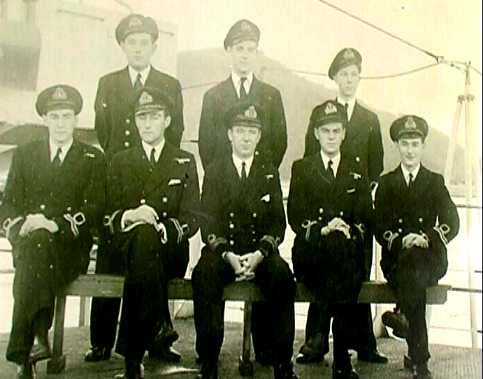
[Photo
opposite and two
below taken on board FDT 13 after her Far East refit show the transmitter
room, the receiver room and the ships officers at Inveraray c1945. Back row
right is Arthur Quinton who supplied the information and photos on FDT 13].
The End of the War
FDT 13 was off Malta
en route to the Far East while FDT 217 was undergoing conversion in
the East I ndia Dock in London. Both their futures were changed in an instant
when the atomic bombs were dropped on Hiroshima and Nagasaki in early August 1945,
which brought an end to
WW2. FDT 13 arrived in Malta's Valetta Harbour on August 22nd and later undertook trials of her equipment with aircraft in the area. ndia Dock in London. Both their futures were changed in an instant
when the atomic bombs were dropped on Hiroshima and Nagasaki in early August 1945,
which brought an end to
WW2. FDT 13 arrived in Malta's Valetta Harbour on August 22nd and later undertook trials of her equipment with aircraft in the area.
Arthur Quinton remembers "I was relieved to find that all my gear worked, despite the rawness of us all. It was an entirely new crew as far as I
remember." Within a week or two, FDT 13 left Valetta arriving back in the
Clyde on September 14, where she spent several weeks on Loch Fyne off Inveraray, Scotland before returning to the London Graving
Dock.
On October 29, she was decommissioned
and repairs were carried out for her return journey to the USA. On December 28th,
she was in Plymouth and by February 27, she was handed over to the US Navy
in Norfolk, Virginia. On June 5th, she was struck from the US Navy list
after 1870 days in service and on
14/10/47 sold to Luria Brothers and Co Inc of Philadelphia for scrapping
 As part of
the decommissioning process on FDT 217, Flt/Sgt John Glen recalled an order to
carefully remove and catalogue 217's sophisticated, top secret radar equipment.
This done in his usual meticulous fashion, he accompanied the resultant lorry
load to a storage facility in a large hanger somewhere in S E England. There,
his precious load was unceremoniously dumped on a mountain of discarded
electronic equipment - proof indeed that the war was well and truly over! LST 217 was transferred to the US Navy on
12/2/46, struck off their lists on 5/6/46 and on 12/12/47 was sold to James A
Hughes of New York for scrapping. As part of
the decommissioning process on FDT 217, Flt/Sgt John Glen recalled an order to
carefully remove and catalogue 217's sophisticated, top secret radar equipment.
This done in his usual meticulous fashion, he accompanied the resultant lorry
load to a storage facility in a large hanger somewhere in S E England. There,
his precious load was unceremoniously dumped on a mountain of discarded
electronic equipment - proof indeed that the war was well and truly over! LST 217 was transferred to the US Navy on
12/2/46, struck off their lists on 5/6/46 and on 12/12/47 was sold to James A
Hughes of New York for scrapping.
Postscript
In 1946, the UK Air Ministry sent around
6000 personalised certificates of appreciation to the Defence Department
in Ottawa, Canada, in recognition
of the magnificent contribution Canadian volunteers made in the field of
radar during WW2. They had been involved on
land, in the air and at sea, mainly in and around the UK but also around
the globe (see Canadians on Radar book listed below.)
 Those men served in small units seldom under the control of high ranking
Canadian officers. This, and the secrecy that shrouded radar work in the
post war years, resulted in there being little understanding and awareness
in the corridors of power in Ottawa of the importance of the veterans'
radar work. With no one in authority to
champion the interest of the men, a decision was taken, in secret, not to
issue the certificates to the men and all but one were destroyed. Those men served in small units seldom under the control of high ranking
Canadian officers. This, and the secrecy that shrouded radar work in the
post war years, resulted in there being little understanding and awareness
in the corridors of power in Ottawa of the importance of the veterans'
radar work. With no one in authority to
champion the interest of the men, a decision was taken, in secret, not to
issue the certificates to the men and all but one were destroyed.
After
nearly 50 years, the existence of the one remaining certificate came to
light and evoked a public outcry from veterans when details
appeared in the media. This resulted in new certificates being issued
to veterans at a radar reunion held in Calgary in June 1996. The copy opposite was provided by Karl Work who served on FDT 217.
RAF Cadre for
Fighter Direction Tenders (FDTs)
Each FDT carried personnel
from the three services; mainly the Navy to operate the craft and the RAF
and RCAF to operate and maintain the radar and communications equipment
and to man the control room. In summary there were; Officers: 3 S/Ldrs; 14
F/Lts; 2 F/Os +19 and Other Ranks: 1 F/Sgt; 17 Sgts; 13 Cpls, 126 AC s =
157. [Information Source; Air Defence Battle Command & Control Museum
Newsletter provided by Phillip C Jones].
Correspondence
  Hi
Geoff Hi
Geoff
Dad was a sergeant in the RAF during the
war, having volunteered in 1940. He trained as a radio operator/radar.
He was picked for HQ staff in1943 and trained in Scotland for duty on
FDT 217 in preparations for the D Day landings. Sadly, most of what I've
learnt about his wartime service has been acquired since he passed away,
as he never spoke about the war and I never thought to ask.
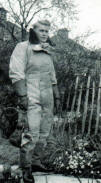
I've attached two photos for you. One is
of Dad’s unit, I believe taken aboard FDT217 and the other just after he
signed up.
Thank you for your website, it has been a
great help to me in piecing together the important contribution my Dad
made to the war effort. It is a pleasure to have supported your work
with a donation to the Combined
Operations Memorial Fund.
Best wishes
Dawn
 Hi
Geoff, Hi
Geoff,
I recently added the enclosed photo of
HMS Boxer to my collection. It is from after the war (1947), so I'm
not sure if it is of any value to your site. As you know, Boxer was a
radar picket ship during D-Day which probably closely matches her
configuration here, though. You can actually see where her bow doors
have been welded shut. I know photos of this ship can be hard to
find. If it helps tell your story in any way, you are welcome to use
it. To my knowledge, it is not under copyright. I have a couple more
in my collection that might help your site as well.
  Robert
Edward Williams - FDT 13 Robert
Edward Williams - FDT 13
Geoff, I hope this email finds you well. I'm
pleased to let you know that my father, Robert Edward Williams, now 91 years of
age, who served on FDT 13 off Normandy on D-Day, has been awarded the Legion d'
Honneur. I have also attached some additional photographs that you may find
interesting along with the letter from the French Government.
Legion of Honour Citation Phil Williams
Combined ops training (Dad back row far
right).
RAF Radio Operators on the deck of FDT
13 (Dad back row far right).
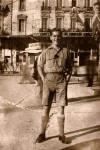
Dad in Athens for the liberation of
Greece.
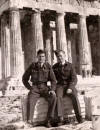
Dad in Athens for the liberation of
Greece.

FDT 13 on it's return to the UK.
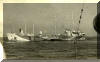 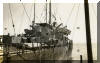  I attach a number of photos of FDT 13 which I found in Lt Commander Bert
Crozier's lost photo album. This turned up when clearing his brother's house in
Dublin. They appear to be taken in warm climes, perhaps in the Med when
with the Americans? John Deering. I attach a number of photos of FDT 13 which I found in Lt Commander Bert
Crozier's lost photo album. This turned up when clearing his brother's house in
Dublin. They appear to be taken in warm climes, perhaps in the Med when
with the Americans? John Deering.
4/5/09. My father, who is still alive, served on FDT 13 through Normandy etc. In
one photo HSL 2595 is tied up alongside. This HSL was based at Bizerta so it's
likely the picture was taken there. Phil Williams, South Wales.
Further Reading
There are around 300 books
listed on our 'Combined Operations Books' page which can be purchased on-line
from the Advanced Book Exchange (ABE) whose search banner checks the shelves of
thousands of book shops world-wide. Type in or copy and paste the title of your
choice or use the 'keyword' box for book suggestions. There's no obligation to
buy, no registration and no passwords. Click
'Books' for more information.
On this website;
D-Day Diary of a Leading Air Craftsman (LAC) on FDT 216
For additional photos and design specifications
click on the links
LST 13,
LST 216 and
LST 217 [Slow
link].
Ships Without Names by Bruce Macdermott. The Story of the Royal Navy's Tank Landing Ships of
WW2. Published by Arms & Armour
Press 1992.
PDF file - A briefing paper by The Association of RAF Fighter Control
Officers. The D-Day Fighter Control Story compiled and edited by Group
Captain Tim Willbond RAF (Retd).
Radar Reflections - the Secret
Lives of Air Force Radar Mechanics in World War Two by Michael
Cumming.
ISBN
1-894255-10-0
Canadians on Radar
1940 -1945 by George K Grande, Sheila M Linden & Horace R Macauly. Published by The Canadian History Project 2000 ISBN
0-9687596-0-2
Public Records in the National
Archive, Kew, London. The records
below are not available to be viewed on line. However, personal callers or paid
researchers can arrange to view the files. Copies of documents can be ordered on-line.
D Day - RAF land based
mobile radar in support of the Omaha Beach landing;
1.
www.therafatomahabeach.com (updated and republished June 22).
2.
https://www.youtube.com/watch?v=8UZU79tAzMU
Sources of Information about the FDTs held at the National Archive at Kew.
ADM 1/16095 ADMIRALTY (5); COMBINED OPERATIONS (47) and NAVAL STATIONS (50): Fighter direction tenders and
ships: report on HM FDT 217 by FDO with various recommendations for improvements to be incorporated in design of new vessels Consideration of
their use in Far East 1944
ADM 1/18207 DISCIPLINE (34): Fighter direction tenders: command administration 1944-1945
ADM
220/1647 Report on fighter direction tenders: interference trials Feb-Apr 1944 1944
AIR 20/6060 Suppression of Radar
interference in communication receivers on Fighter Direction Tenders: reports by Royal Aircraft Establishment, Farnborough 1943 July-1944
June
AIR 29/509 H.Q. Ship Personnel Holding Unit and H.M. Fighter Direction Tender No. 13 1944 July-1945 July
AIR 37/1439
2ND TACTICAL AIR FORCE: Reports on Operation "Neptune" by Air Staff Officers of Headquarters Ships and Fighter Direction Tenders
1944-1945
AIR 51/307 AEAF Air Staff files: Operation `Neptune': reports on fighter direction tenders
(FDT's) 01/06/1944 -
30/09/1944
AIR 51/322 AEAF Air Staff files: Fighter direction tenders: organisation and formation 01/12/1943 - 31/10/1944
AVIA
6/14431 Fighter direction tenders: suppression of radar interference in communication receivers 1944
AVIA 13/1143 Baccy
fighter direction tenders 1944
CAB 106/1055 Report on the role and operation of British Headquarters ships and Fighter Direction
tenders in the assault on Europe 1944 June, by Headquarters Allied Expeditionary Air Force. 1945
DEFE 2/421 Report on the role of
British headquarters ships and fighter direction tenders 1945
DEFE 2/1072 Fighter direction tenders: requirements etc
1943-1945
DEFE 2/1225 Fighter direction tender: requirements, policy, manning, equipment etc 1944-1945
DEFE 2/1226
Fighter direction tender: equipping of HM Ships BOXER, BRUISER and THRUSTER; disposal of fighter direction ships 1944-1945
HW 14/107
EWT to AGD July 2 re GPO and protest from slip-readers, EWT to HCS Maine at HQ, slip-readers at Aldford House, Northleach, Electra House and
Denmark Hill to come under operational control of CLSW from July 14, admin to remain with Maine; WTC to OC Beaumanor July 1 re printer cover,
reply July 3, unit ready to receive civilian operators for 12 additional sets, WTC to OC July 5 WTC to contact CSO (SW) and request up to 6
printer positions to be manned by civilian operators from Denmark Hill; Winterbotham at HQ complains to Air Cdr Buss, D of I (R) at AM July 4
over compromise of Sigint, (sinking of Scharnhorst from Sigint tip-off) by AM rep at Treasury meeting of June 30 to discuss pay increases for
PO Sigint operators; DMS to HBS July 1 on talks with OC Forest Moor on June 30; Hut 3 report to WTC July 1 on E cover targets and results, DMS to
BEW July 3 with status of E positions at UK stations; WTC summary July 1 of UK Army DF facilities and future requirements; OC Kedleston Hall to J
de 1944 July 1-15
WO 244/12 Operation Neptune : report on the role of British Headquarters ships and fighter direction tenders in
the assault on the continent of Europe 1944 June
Air Support
for the Calibration of FDT Radar
Before the FDTs could be used in
action, their radar equipment had to be calibrated against known positions of
aircraft within the range of their equipment. It was essential to achieve a very
high level of accuracy, since operational decisions, such as the deployment of
fighters, would depend upon it.
The task of providing the air support for this work was given to
516 Combined Operations Squadron and planes from
RCAF and RAF squadrons on attachment. In the National Archives at Kew, Air 27/1983
contains operational details of this work. All the
trials referred to took place in the area of the River Clyde. Subsequent trials were carried
out in the Forth Estuary, the Humber Estuary and off the south coast of England.
Acknowledgments
 Thanks are due to John Glen, Karl Work, Len Betts, Maurice Harding all of whom
served on FDT 217, Arthur Quinton (FDT 13)
and Phillip Jones, John Deering, Pam Wright and Jennifer
Robinson. Thanks are due to John Glen, Karl Work, Len Betts, Maurice Harding all of whom
served on FDT 217, Arthur Quinton (FDT 13)
and Phillip Jones, John Deering, Pam Wright and Jennifer
Robinson.
|